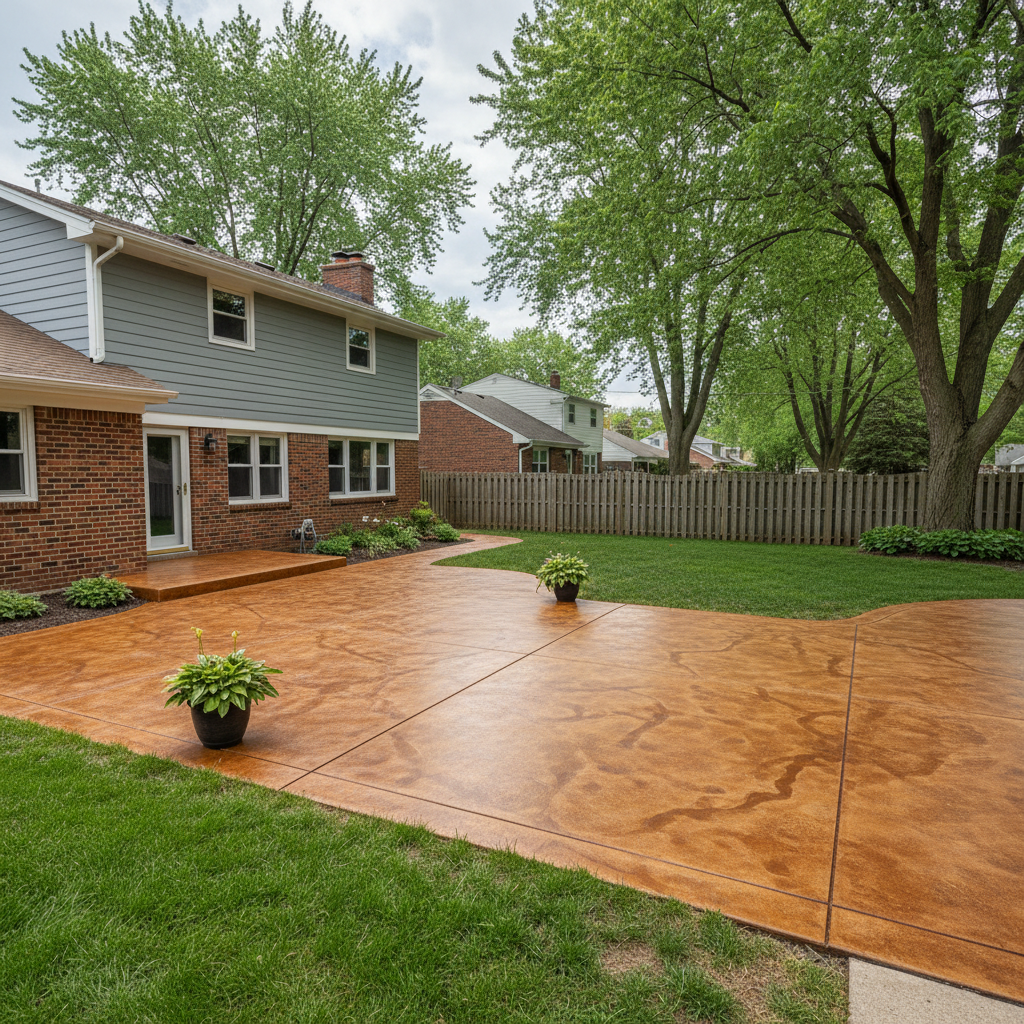
So, you're thinking about staining your concrete, huh? Maybe it's that basement floor, your patio, or even the garage. Honestly, it's a great choice. Stained concrete looks fantastic, it's tough, and it can really give a space a whole new vibe. But just like any home improvement project, you can't just dive in headfirst. You need a plan. Here's what I usually tell folks right here in Evanston when they're considering it.
Your Concrete Staining Timeline: What to Expect
People often don't realize how long a concrete staining project actually takes. It's not just a quick slap of paint, you know? You've got the prep work, the actual application, and then that super important curing time. Seriously, don't plan a big backyard BBQ the day after your patio gets stained.
- Initial Consultation & Quote (1-2 weeks): This is when you give us a call. We'll come out, take a look at your existing concrete, chat about what you're hoping for, and then give you a price. Good contractors are usually pretty busy, so don't expect us to show up tomorrow.
- Scheduling (2-4 weeks out): Once you give us the green light on the quote, we'll get you penciled into our schedule. Again, the best pros are often booked up. So, plan ahead, especially if you're aiming for a particular season.
- Project Duration (2-5 days, typically): This is the actual hands-on work. The time it takes really depends on how big the area is, what condition the concrete's in, and how tricky the stain application will be. A small, clean basement floor might be quicker than a big, really dirty patio, for instance.
- Curing Time (24-72 hours, minimum): After we've put down the stain and sealer, you absolutely cannot walk or put heavy stuff on it. This step is critical for both durability and how it looks in the long run. We'll tell you exactly how long you need to wait.
Oh, and don't forget to factor in potential weather delays, especially for outdoor jobs. We get some pretty wild swings here in Evanston – from those humid summer days to unexpected spring showers. That kind of thing can definitely push schedules back.
What Happens During the Staining Process?
It's way more than just spraying on some color. We follow several steps, and each one plays a vital role.
- Surface Preparation: This is probably the most crucial part. We've got to get that concrete super clean. Any dirt, grease, old paint, or sealers will stop the stain from really soaking in properly. We might use pressure washing, degreasers, or even grinding for those really stubborn spots. If your concrete has cracks or divots, we'll talk about fixing those up first.
- Acid Etching (for some stains): If we're using an acid-based stain, we'll etch the concrete. This opens up its pores, helping the stain react with the concrete and create those unique, mottled patterns.
- Stain Application: Here's where the magic happens, right? We apply the stain evenly, sometimes doing multiple coats depending on how intense you want the color. We're super careful about overspray, especially if you've got brick or siding nearby.
- Neutralization & Cleaning (for acid stains): After an acid stain has done its thing, we neutralize it and clean off any leftover residue.
- Sealing: This is what protects your beautiful new stained concrete. The sealer helps prevent wear, makes it easier to clean, and really enhances the color. We usually put on a couple of coats.
It's a messy process, especially the prep and cleaning parts. We'll do our best to contain it, but you should expect some dust and noise.
How You Can Prepare Your Home
You've got a part to play in making this whole thing go smoothly. Your contractor isn't a moving company or a maid service, after all.
- Clear the Area: Move all your furniture, plants, grills, storage boxes – literally everything – out of the work zone. If it's an inside job, protect nearby areas with plastic sheeting or drop cloths.
- Access: Make sure we can easily get to the work area, and that we have access to water and electricity.
- Pets & Kids: Keep them away from the work area during the project and especially during that curing time. Stains and sealers have fumes, and wet concrete is slippery.
- Ventilation: For indoor projects, be ready to open windows or use fans for ventilation. We'll bring our own, but more airflow is always better.
If you're in an older Evanston home, say, one of those beautiful brick houses near Northwestern, your concrete might be original to the house. It could have decades of grime or old coatings built up. That means more prep work, which we'll factor into the quote, but it's good for you to know upfront.
Questions to Ask Before You Sign That Contract
Don't just jump on the first quote you get. Ask questions! Any reputable company, like Absolute Concrete Co, will be happy to answer them.
- What type of stain are you recommending and why? There are acid-based, water-based, and dye stains. They all give different looks and have different properties.
- What's your exact prep process for my specific concrete? Get into the weeds here. This is where a lot of projects go sideways.
- How many coats of sealer will you apply, and what kind? A good sealer is absolutely essential for how long it lasts.
- What's the expected drying and curing time? You need to know when you can actually use the area again.
- What's your warranty on the work? Don't just assume there is one.
- Can I see examples of your stained concrete work? Photos are nice, but if they can point you to a local job they've done (with the homeowner's permission, of course), that's even better.
- What's your plan for protecting adjacent areas? How will they stop stain from getting on my walls, landscaping, or siding?
- What's the payment schedule? Usually, it's a deposit upfront and the rest when the job's done.
Staining concrete is a fantastic way to upgrade your home. Just make sure you go into it with your eyes wide open and a clear understanding of the process. Do your homework, ask the right questions, and you'll end up with a beautiful, long-lasting finish.