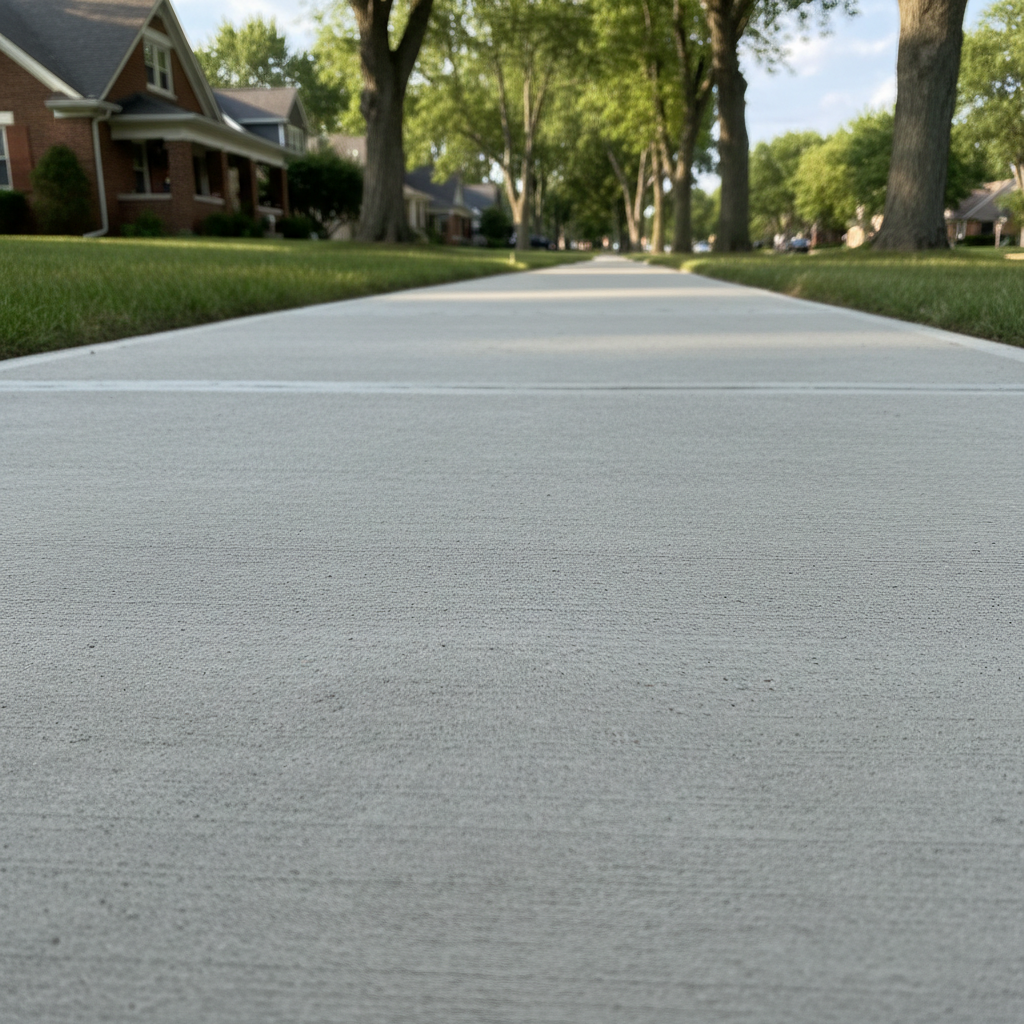
Alright, let's talk sidewalks for a minute. You probably walk on them every single day, right? But when something goes wrong with one, it can honestly feel like a huge hassle. Here in Evanston, our concrete sidewalks really take a beating; we've got that lake effect weather, plus all that clay soil, which means they face some tough conditions. Homeowners often come to me with the same kinds of questions, and that's understandable. So, I figured it was time to put together some straightforward answers, no fancy language, just the stuff you actually need to know from someone who's been pouring and fixing concrete around here for years at Absolute Concrete Co.
Who's actually responsible for my sidewalk – is it me or the City of Evanston?
This is probably the question I hear most often, and it's a good one because, frankly, it's not always clear-cut. Generally speaking, if we're talking about the public sidewalk right next to your property, you, the homeowner, are the one responsible for keeping it up and fixing it. That means you need to make sure it's clear of snow, ice, dirt, and even weeds. If it gets damaged and turns into a tripping hazard, well, that's on you to deal with. The City does run programs, like their Sidewalk Improvement Program, which helps pay for replacements. This program is city-funded and prioritizes areas near schools, hospitals, and transit hubs. They used to have a 50/50 program where costs were split, but it looks like the current Sidewalk Improvement Program fully covers eligible sections now. Still, if your sidewalk doesn't meet their specific criteria for a full replacement, fixing things like standing water is still your job.
When is a sidewalk repair enough, and when do I need a full replacement?
That's the big question, isn't it? It really comes down to how bad the damage is. Small cracks, minor scaling (that's when the surface starts to flake off), or little bits of spalling (pitting) can often be fixed up. If you've got hairline cracks, say less than 1/8 inch wide, sealing them can actually help your sidewalk last longer. But if you're seeing big cracks — we're talking 1/4 inch or wider — or sections broken into three or more pieces, significant heaving (where one slab is an inch or more higher than the next), or widespread spalling over more than 33% of the surface, then you're probably looking at a full replacement. Evanston's freeze-thaw cycles are pretty brutal, and once concrete really starts to go, it can fall apart quickly.
How much does it cost to repair or replace a concrete sidewalk in Evanston?
The costs can really vary quite a bit, depending on exactly what needs to be done. For small crack repairs, you might expect to pay $100-$300. If you need to level sections that are uneven, that could run you $5-$15 per linear foot. A complete replacement, which includes taking out the old concrete, typically costs between $8 and $15 per square foot. Some sources suggest a standard 5x5 foot slab replacement could be anywhere from $130 to $380. Just remember, things like preparing the site, getting rid of the old concrete, and how easy it is to access the area can all add to the total bill. Demolition and disposal alone can tack on an extra $2-$6 per square foot. So, while a 200-square-foot sidewalk might average $1,600 to $2,400 for installation, those extra factors are definitely something to consider.
Do I need a permit for sidewalk work in Evanston?
Yes, you typically do. Anytime you're doing work within the City's Right of Way (ROW), and that includes sidewalks, you'll need a permit. This isn't just for big projects either; it applies to anything that blocks the street, alley, parkway, or sidewalk. If you skip getting one, the City can fine you $500 per day, which is a pretty hefty sum. It's always a good idea to check with the City of Evanston's Building and Inspection Services. They'll tell you exactly what's required, especially if your property is in a historic district, like the Lakeshore Historic District, which might have extra review requirements.
My sidewalk is all cracked and lifted because of tree roots. What can I do?
Ah, tree roots. They're often the cause of many an Evanston sidewalk problem, especially in our older neighborhoods with those big, beautiful parkway trees. Tree roots are always searching for water and nutrients, and they can put a lot of pressure on things, pushing up and cracking concrete. You'll see buckling, cracks, and uneven sections because of them. Short-term fixes like grinding down raised spots or patching cracks can help, but they don't stop the roots from growing. Mudjacking can sometimes help by pumping a slurry underneath, which can slow down root progression. For a more lasting solution, you might need to think about root pruning (but make sure an arborist does this carefully so the tree isn't harmed), putting in root barriers, or even changing the design of the sidewalk to curve around the tree or bridge over the roots. When you're planting new trees, keep them at least 3-4 feet away from sidewalks, or 6-8 feet for larger species, to avoid these issues down the road.
How long should a concrete sidewalk last in Evanston, and what makes it fail?
A concrete sidewalk that's installed well and cared for properly can last 30 to 50 years, sometimes even longer. Commercial sidewalks might last 25-35 years. But here in Evanston, we face some unique challenges. Our biggest enemy is the freeze-thaw cycle. Every winter, we experience 25-30 of these cycles, where water gets into tiny cracks, freezes, expands, and then breaks the concrete apart. That's why air-entrained concrete is so important here; it has microscopic air bubbles that give that freezing water somewhere to expand without damaging the concrete. Then there's the Chicago Blue Clay soil, which is common in many Evanston neighborhoods. It expands and contracts with moisture, constantly putting pressure on slabs and causing uneven settlement and heaving. Lake effect humidity and road salt also play a role in surface scaling and spalling.
What's the deal with drainage? My sidewalk always has puddles.
Ponding water is definitely a problem, and it usually signals poor drainage or settlement. If water just sits on your sidewalk, it speeds up how quickly it falls apart, especially with our freeze-thaw cycles. It can also mean the sidewalk has settled in a way that directs water toward your house, potentially leading to basement leaks or issues with your foundation. Sometimes, it's as simple as the grade of the surrounding parkway being off, or the sidewalk not having enough slope away from your home. You might need to regrade the parkway, install an infiltration trench, or even rebuild/repair the sidewalk with a better slope. If you've got standing water for more than 72 hours after a rain, the City might even get in touch with you about it. Making sure that water drains properly is key to your sidewalk's longevity and, honestly, to protecting your home.
Look, your sidewalk is more than just a path; it's a big part of your property's curb appeal and its overall safety. Keeping it in good shape is just a smart investment, plain and simple. If you've got more questions, or if you need an expert eye on your Evanston sidewalk, don't hesitate to give Absolute Concrete Co a call. We're always happy to help out our neighbors.