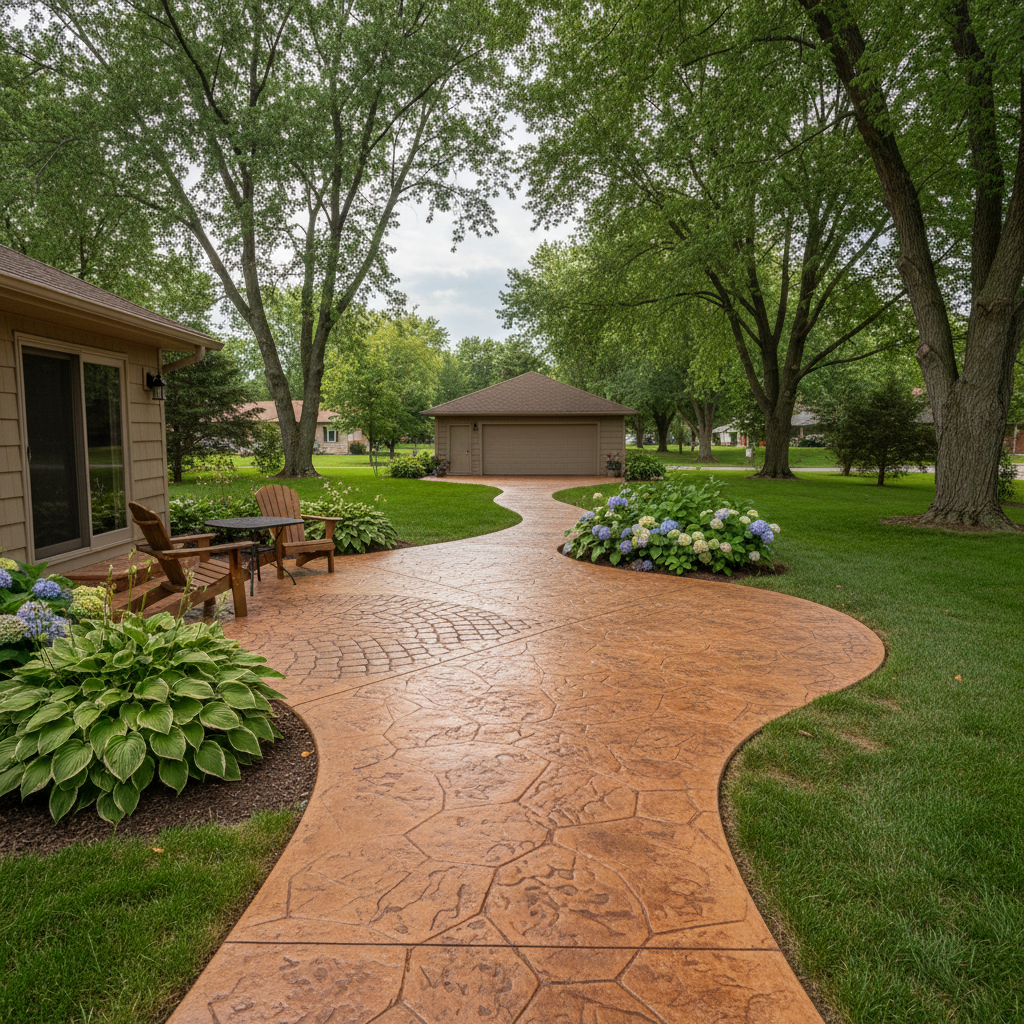
You're probably wondering when's the best time to get that new stamped patio or colored driveway done. Or maybe you've already got some decorative concrete and you're just trying to figure out how to keep it looking sharp through our wild Evanston weather. I totally get it. This isn't Florida; our climate really throws a lot at concrete, especially the fancy decorative stuff.
Timing Your Decorative Concrete Project in Evanston
Let's be real: you can't just pour decorative concrete whenever you feel like it. The weather here, well, it dictates everything. Spring and fall are generally your best bets. Why? Because you need consistent temperatures – not too hot, not too cold, and definitely not too wet.
- Spring (Late April to Early June): This is prime time, no doubt. The ground has thawed out, and we're usually past the worst of those nasty freeze-thaw cycles. Temperatures are mild, typically hanging around the 50s and 60s, which is perfect for concrete to cure properly. It gives the concrete plenty of time to gain strength before the real heat of summer or the deep cold of winter sets in.
- Summer (Mid-June to Early September): It's certainly doable, but it definitely comes with challenges. High heat can make concrete set way too fast, which can lead to cracking or a weaker surface if it's not handled just right. We're talking about needing to add retarders, work faster, and often cure more aggressively. If you're planning a summer project, make sure your contractor really knows how to handle hot weather pours. Afternoon thunderstorms are also a big concern; a sudden downpour on fresh decorative concrete can absolutely ruin the finish.
- Fall (Mid-September to Mid-November): Another excellent window, if you ask me. The days are usually warm enough, and the nights aren't freezing yet. This allows for a good, slow cure, which is exactly what you want for durability. You've got to watch the forecast super carefully though. An early cold snap, especially if it drops below freezing at night, can be detrimental to fresh concrete. We're always checking those overnight lows, believe me.
- Winter (December to March): Forget about it for decorative concrete. Just don't. Pouring concrete in freezing temperatures is a recipe for disaster, especially for decorative finishes that rely on precise timing and surface work. The water in the mix freezes, expands, and totally compromises the concrete's strength and finish. Even if you try to tent and heat it, it's risky and expensive, and honestly, not worth it for a decorative surface you want to last.
When you're talking to Absolute Concrete Co, we'll always factor in the forecast. We don't just guess; we'll look at the 5-day and 10-day outlook to make sure we're pouring in optimal conditions. We've seen too many projects go south because someone tried to rush it or just ignored the weather.
Weather Conditions That Affect the Work
It's not just temperature, you know. Humidity, wind, and rain all play a part. High winds can dry out the surface of the concrete too quickly, which can lead to hairline cracks. Low humidity can have a similar effect. Rain, as I mentioned, is a huge problem. You simply can't stamp or color concrete in the rain. It washes away surface treatments and can pit the finish. We really need a clear, dry window for the pour and the initial curing period.
For Evanston homeowners, especially those with older homes in areas like the Central Street corridor where the soil can be a bit clay-heavy, proper base preparation is also key. If the ground isn't stable and well-drained, even the best concrete pour won't last as long as it should. The freeze-thaw cycles we get here are brutal on anything that's not installed correctly.
Protecting Your Decorative Concrete Year-Round
So, you've got your beautiful new stamped patio or colored walkway. Now what? You've invested in it, so you want it to look good for years. Here's what you need to do:
- Seal It Regularly: This is probably the most important thing you can do. Decorative concrete needs a good quality sealer. It protects against moisture penetration, stains, and abrasion. For our climate, I recommend re-sealing every 1-3 years, depending on the traffic and exposure. You'll know it's time when water stops beading up on the surface – that's your cue.
- Clean It: Don't let dirt, leaves, and other debris sit on it for long periods. A simple sweep and occasional rinse with a hose are usually enough. For tougher spots, a mild detergent and a soft brush will do the trick. Avoid harsh chemicals or pressure washing at too high a setting, as they can damage the sealer or the concrete itself.
- Avoid De-icing Salts: This is a big one for Evanston winters. Most de-icing salts, especially those containing ammonium nitrate or ammonium sulfate, are terrible for concrete. They cause spalling (flaking) and deterioration. If you need to de-ice, use sand for traction or products specifically labeled as