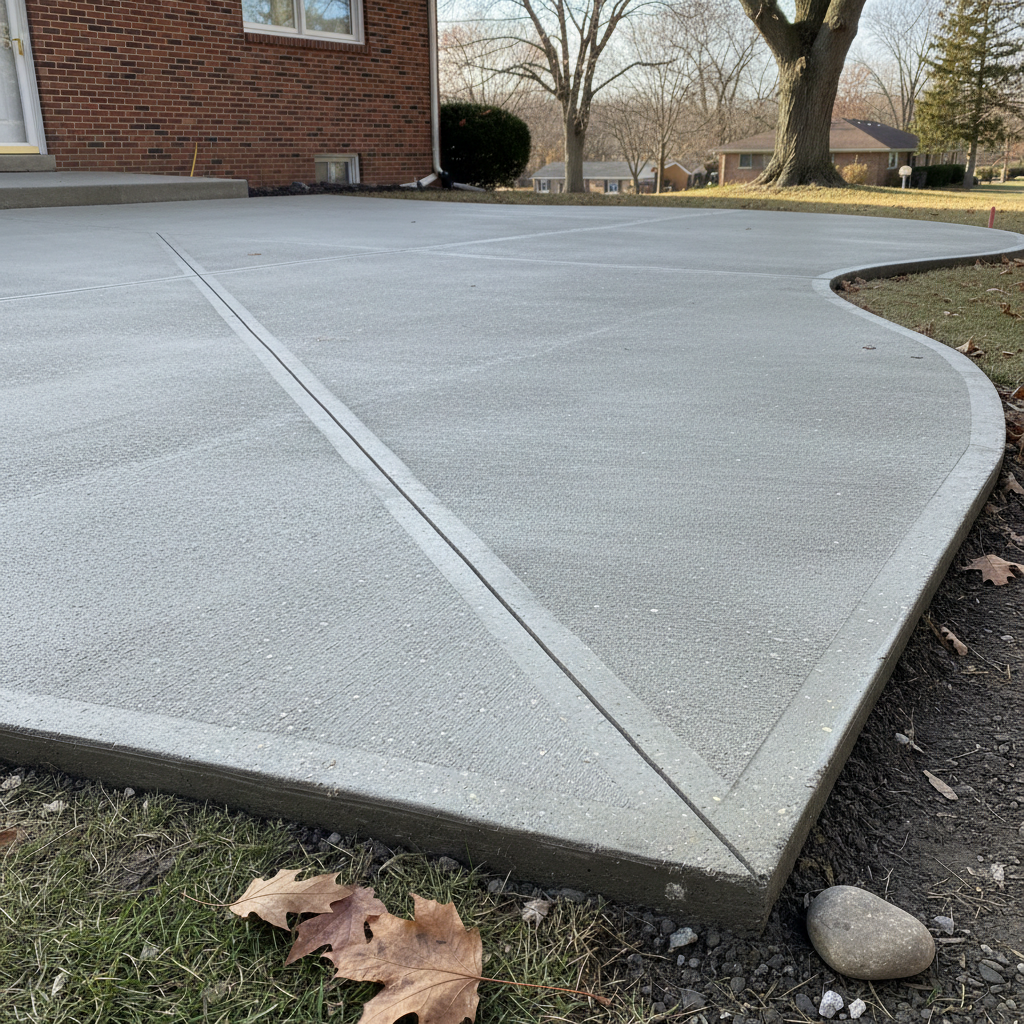
Thinking About New Concrete Flatwork?
So, you're looking at that cracked walkway or uneven patio and thinking, "Maybe it's time for some new concrete." Good call. Fresh concrete flatwork can really boost your home's curb appeal and make your outdoor spaces way more functional. But before you grab a shovel and a bag of mix, let's talk about what's involved. I've been doing this for years here in Evanston, and I've seen homeowners try to tackle jobs that were way over their heads, and others who did a pretty decent job on smaller projects. It all comes down to knowing your limits and understanding the process.
Before You Start: Planning & Permits
First things first: planning. What exactly do you want? A new sidewalk? A patio? A small pad for your trash cans? Sketch it out. Measure it. Think about drainage. This is crucial, especially with our Evanston winters and the freeze-thaw cycles we get. You don't want water pooling against your foundation or creating ice hazards. Consider where rainwater will go. Will it flow away from your house? Will it drain into your neighbor's yard? You might need a slight slope, usually about 1/8 to 1/4 inch per foot. Don't eyeball this; use a level.
Next, permits. For most significant concrete flatwork, especially if it's connected to public sidewalks or involves a large area, you're going to need a permit from the City of Evanston. Trust me, you don't want to pour a beautiful new driveway only to have the city make you tear it out because you skipped the paperwork. Check their website or give the building department a call. They'll tell you exactly what's required.
Also, call J.U.L.I.E. (811) before you dig. Always. Even if you're just scraping off a few inches, you never know what utility lines are buried under your property. Hitting a gas line or a fiber optic cable is a headache you absolutely don't want.
DIY vs. Calling a Pro: Where's the Line?
This is where a lot of homeowners get stuck. Can you do it yourself? Maybe. For a small, non-structural concrete pad – say, 3x3 feet for a new AC unit or a small stepping stone path – you might be able to pull it off. Here's what that involves:
- Excavation: Digging out the area to the right depth.
- Base Prep: Laying down and compacting 4-6 inches of gravel. This is vital for drainage and stability, especially with our clay soils around here.
- Formwork: Building a sturdy frame with lumber to hold the concrete in place.
- Mixing & Pouring: For small jobs, you can use bags of ready-mix concrete and a wheelbarrow or a small mixer. For anything bigger, you'll need a concrete truck.
- Finishing: Spreading, leveling, and smoothing the concrete. This is where skill really comes into play.
- Curing: Protecting the concrete as it dries to achieve maximum strength.
Now, when should you call a pro like Absolute Concrete Co.? Pretty much any time you're talking about a driveway, a large patio, a new sidewalk, or anything that needs to be perfectly level, sloped correctly, or handle heavy loads. Here's why:
- Expertise: We know the right mix for our climate, how to handle tricky grades, and how to get a smooth, durable finish that lasts.
- Equipment: We've got the heavy machinery for excavation, power screeds, specialized finishing tools, and access to large concrete pours.
- Efficiency: We can get the job done quickly and correctly, minimizing disruption to your home.
- Longevity: A properly installed concrete slab will last decades. A DIY job that's done poorly can crack, heave, and crumble in just a few years, costing you more in the long run.
- Permits & Codes: We're familiar with Evanston's specific building codes and permit requirements, ensuring everything is up to snuff.
Pouring concrete isn't just about dumping wet stuff on the ground. It's a science. The timing, the mix, the finish, the cure – it all matters. If you're not confident you can get a perfectly smooth, level, and properly sloped surface, especially one that's visible or heavily used, then it's worth investing in a professional.
During the Project: What to Watch For
If you hire us (or another reputable contractor), we'll handle most of this. But it's good for you to know what's happening. Make sure the base is properly prepared and compacted. You should see a good layer of gravel. Check the forms; they should be square, level (or correctly sloped), and securely staked. When the concrete arrives, it should look consistent, not too wet or too dry. A good crew will be working fast to get it spread, leveled, and floated. This is where the magic happens, turning that soupy mix into a smooth surface.
After the Pour: Curing & Care
Once the concrete is poured and finished, the work isn't over. Curing is critical. This means keeping the concrete moist for several days, sometimes even a week or more. We might use curing compounds, plastic sheeting, or even just regular misting with water. This process allows the concrete to gain its full strength and prevents surface cracking. Don't walk on it for at least 24-48 hours, and keep heavy vehicles off it for at least 7 days, sometimes longer depending on the mix and weather. We'll give you specific instructions.
Long-term, concrete is pretty low maintenance. Keep it clean, and if you live in a spot where it gets a lot of salt or chemicals in the winter, consider sealing it every few years. This helps protect against our harsh Evanston elements. If you see small cracks, don't panic immediately; concrete naturally expands and contracts. But if they're wide or uneven, give us a call at Absolute Concrete Co. We can assess the situation and recommend repairs.
Ultimately, whether you DIY or hire a pro, a well-done concrete flatwork project will add value and enjoyment to your home for years to come. Just make sure you do your homework first.